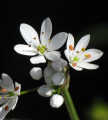
Family Description: Elatinaceae is a modestly sized family of aquatic and semi-aquatic angiosperms within the order Malpighiales, encompassing approximately 35 to 50 species distributed across two principal genera: Elatine and Bergia. Its members are primarily herbaceous, occupying freshwater ecosystems such as marshes, river margins, and temporary pools in both tropical and temperate biogeographic zones.
Species of Elatine are minute, mat-forming annuals or perennials that inhabit shallow water or muddy substrates. Their leaves are arranged oppositely or in whorls and often possess marginal glands. Stipules are present, contributing to their diagnostic value. Bergia species are generally more robust and may assume a subshrubby habit, capable of thriving in both aquatic and terrestrial habitats. Some exhibit heterophylly and produce adventitious roots adapted to submerged or emergent conditions.
The floral morphology is relatively uniform across the family. Flowers are bisexual and actinomorphic, with 2 to 5 free sepals and an equal number of often overlapping petals. They are typically solitary or borne in cymes, and their small size belies intricate structures adapted to entomophily. The androecium comprises a corresponding number of stamens, while the gynoecium is superior and syncarpous, usually consisting of 2 to 5 carpels with axile or basal placentation. The fruit is a septicidal capsule that dehisces to release numerous minute, often mucilaginous seeds.
Phylogenetically, Elatinaceae is closely aligned with Malpighiaceae and Clusiaceae, sharing certain embryological and seed anatomical traits. While not of major economic value, select species such as Elatine hydropiper and Elatine hexandra are valued in the aquarium trade for their compact, mat-forming growth.
Family Description: Euphorbiaceae, commonly known as the spurge family, is one of the largest and most diverse families of flowering plants, encompassing around 7,500 species across approximately 300 genera. Members of this family exhibit remarkable morphological variety, ranging from tiny herbs to large trees, and even cactus-like succulents—many of which have evolved convergently to resemble true cacti.
Botanically, Euphorbiaceae species often possess alternate, simple leaves with stipules, though some may be lobed or compound. A distinctive feature in many genera is the presence of milky latex, which can be toxic and serves as a defense mechanism. The family includes both monoecious and dioecious species, with unisexual flowers that are typically small and lack petals. In the genus Euphorbia, flowers are arranged in a unique inflorescence called a cyathium—a cup-like structure that mimics a single flower but actually contains multiple reduced male and female flowers.
Fruits are usually schizocarps, which split explosively to disperse seeds. Economically, the family is significant: it includes Hevea brasiliensis (the rubber tree), Manihot esculenta (cassava), Ricinus communis (castor oil plant), and ornamental species like Euphorbia pulcherrima (poinsettia).
( Saint John's Wort Family ) Conservative synonym: Guttiferae
Subfamalies: nil.
Family Description: Hypericaceae, commonly known as the St. John’s wort family, is a family of flowering plants within the order Malpighiales, comprising approximately 6 to 9 genera and up to 700 species. Members of this family are found worldwide, except in extremely cold or arid regions, with the genus Hypericum being the most widespread and well-known.
Morphologically, Hypericaceae species are typically herbs, subshrubs, or shrubs, either annual or perennial. Leaves are simple, entire, and arranged oppositely, often dotted with translucent or black glandular spots—features that are especially prominent in Hypericum perforatum. These glands may contain secondary compounds like hypericin, which are photosensitive and have pharmacological significance.
The flowers are actinomorphic, bisexual, and usually yellow, borne in cymose inflorescences. They typically have four or five persistent sepals and petals, with numerous stamens often grouped into fascicles. The ovary is superior, composed of three to five fused carpels, and the styles may be free or fused at the base. Fruits are usually dry, dehiscent capsules that split open to release numerous small seeds.
This family was once considered a subfamily of Clusiaceae but is now recognized as a distinct lineage, supported by both morphological and molecular evidence.
Wavy-leaved Saint John's Wort, Curled-leaved Saint John's Wort, Tangled Hypericum
Fexfiex tar-Raba
Jun-Sep
Detailed Profile with
images.
LINACEAE S.F. Gray
( Flax Family )
Subfamalies: Linoideae; Hugonioideae
Family Description: Linaceae, commonly known as the flax family, is a family of flowering plants within the order Malpighiales. The family is cosmopolitan, with a primary center of diversity in temperate regions, and it comprises roughly 14 genera and about 250 species. Traditionally, Linaceae is divided into two subfamilies: the Linoideae, which includes the well-known genus Linum (flax), and the Hugonioideae, sometimes recognized as the separate family Hugoniaceae, which tends to include woody vines, shrubs, or trees mainly in tropical areas.
Morphologically, plants in this family are usually herbaceous annuals or perennials, although a few are subshrubs or woody forms. The leaves are always simple and are most commonly arranged alternately, though in a few genera, they can be opposite or even whorled. Their flowers are typically small, actinomorphic, and pentamerous—possessing five free sepals and five free, often contorted petals. The androecium generally consists of ten stamens arranged in two whorls, with reductions (i.e., staminodes) in some taxa. The gynoecium is composed of two to five fused carpels forming a superior ovary with axile placentation, usually maturing into septicidal capsules that split open upon ripening.
Economically and historically significant, the genus Linum, particularly Linum usitatissimum (cultivated flax), is renowned not only for producing linen fiber but also for yielding linseed oil, which has diverse culinary and industrial applications.
Family Description: Passifloraceae, the passionflower family, is a diverse group of flowering plants within the order Malpighiales, comprising approximately 27 genera and around 750 species. Most members are herbaceous or woody vines, though the family also includes shrubs and small trees, particularly in tropical and subtropical regions.
A hallmark of Passifloraceae is its climbing habit, often facilitated by axillary tendrils. Leaves are typically alternate, simple or lobed, and often stipulate. The flowers are actinomorphic and bisexual, usually with five sepals and five petals, and often feature a prominent corona—an additional whorl of filamentous structures between the petals and stamens. The reproductive organs are borne on a stalk-like structure called an androgynophore, elevating the ovary and stamens above the base of the flower.
The ovary is superior and typically trilocular, maturing into a berry or capsule. Seeds are often arillate, aiding in animal-mediated dispersal. The genus Passiflora is the largest and most iconic, known for its intricate floral morphology and edible fruits like passionfruit (Passiflora edulis). This family exemplifies coevolutionary relationships, particularly with pollinators and herbivores, and plays a significant role in tropical ecosystems.
Family Description: Salicaceae, commonly known as the willow family, has long been recognized for its classic genera such as Salix (willows) and Populus (poplars). Recent molecular research, however, has broadened the family considerably so that it now includes around 56 genera and approximately 1,200–1,220 species. These plants are primarily woody, appearing as deciduous trees and shrubs in temperate regions and as evergreen species in many tropical habitats. Their leaves are generally simple and arranged alternately, with many showing serrated margins and the distinctive “salicoid tooth,” where a principal vein extends into the tip of a serration with an associated glandular seta.
The flowers of Salicaceae are typically small, reduced, and adapted to wind pollination, often arranged into catkins in species like willows. The fruits tend to be capsules that split open to disperse numerous tiny seeds, a feature that, coupled with clonal reproduction seen in some groups (such as the long-lived aspen clones), highlights the adaptive strategies of these plants. Ecologically, members of Salicaceae are crucial for stabilizing riverbanks and riparian zones, acting as pioneer species in disturbed areas and contributing to overall ecosystem health. Economically, the family’s importance is underscored by products such as salicin—originally derived from willows—which played a key role in the development of aspirin, alongside their uses in traditional medicine, forestry, and landscape architecture.
Family Description: Violaceae, commonly known as the violet family, is a group of flowering plants that encompasses roughly 800 to 1,000 species distributed among about 23 to 25 genera, with the genus Viola being its most prominent representative. Many members of this family are herbaceous perennials, though some take the form of shrubs, woody vines, or even small trees. Their leaves are generally simple with often heart-shaped or ovate forms, and while stipules can be present, they tend to be inconspicuous.
The flowers of Violaceae are typically zygomorphic—displaying bilateral symmetry—with five free sepals and five petals. A characteristic feature is the markedly enlarged lower petal, which is frequently spurred to guide pollinators toward nectar. In many species, a dual flowering strategy is evident, as they produce both chasmogamous (open and showy) and cleistogamous (self-pollinating, closed) flowers to maximize reproductive success under varying conditions. Their fruit is usually a capsule that splits open to disperse numerous small seeds.
Widely distributed in temperate and subtropical regions—with a number of species also present in tropical areas—Violaceae members play important ecological roles in natural habitats and are also celebrated for their ornamental value in gardens. Their diverse and adaptive floral forms have fascinated both botanists and horticulturists, making the violet family a captivating subject of study in plant systematics and evolution.