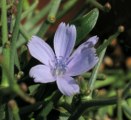
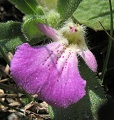
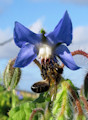
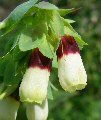
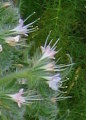
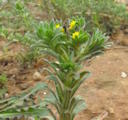
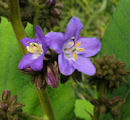
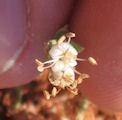
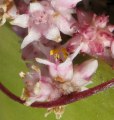
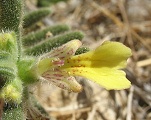
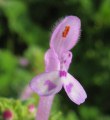
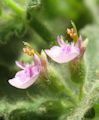
Family Description: Boraginaceae, commonly known as the borage or forget-me-not family, is a diverse group of flowering plants within the order Boraginales. It includes approximately 146 to 154 genera and over 2,700 species, with a cosmopolitan distribution and a strong presence in Mediterranean and temperate regions.
Most members are herbaceous plants, though shrubs, trees (Cordia), and even parasitic forms exist. Plants are often hispid, covered with coarse hairs containing silica or calcium carbonate, which can cause skin irritation. Leaves are alternate, simple, and exstipulate, typically entire and often rough to the touch.
Inflorescences are characteristically scorpioid cymes, coiled like a scorpion’s tail and uncoiling as flowers bloom. Flowers are actinomorphic, bisexual, and pentamerous, with a gamopetalous corolla that may be tubular, funnel-shaped, or rotate. A corona of scales or hairs often arises from the corolla throat. Stamens are five, epipetalous, and the gynoecium is bicarpellary, syncarpous, with a superior ovary that may become four-lobed due to a false septum, resulting in four nutlets as fruit.
Pollination is typically entomophilous, and many species exhibit color changes in the corolla with age, signaling pollinator readiness. Seeds are usually non-endospermic, with a curved embryo.
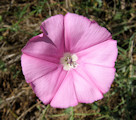
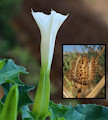
Family Description: Convolvulaceae, commonly known as the morning glory or bindweed family, is a large and diverse group of flowering plants in the order Solanales, comprising about 60 genera and over 1,600 species. These plants are found worldwide, especially in tropical and subtropical regions, and are well known for their twining stems and vibrant, funnel-shaped flowers.
Most members are herbaceous vines, though the family also includes shrubs, trees, and a few aquatic or parasitic species. The stems are often twining or trailing, and many contain latex. Leaves are typically alternate, simple, and exstipulate, with entire or lobed margins. In parasitic genera like Cuscuta (dodder), leaves are reduced to scales, and the plant lacks chlorophyll.
Flowers are usually actinomorphic, bisexual, and pentamerous, with a gamopetalous corolla that is often funnel-shaped or campanulate. The calyx consists of five sepals, usually free and persistent. Stamens are five, epipetalous, and often unequal in length. The ovary is superior, bicarpellary and syncarpous, typically with axile placentation and two ovules per locule.
Fruits are generally capsules, though berries and nuts also occur. Seeds are endospermic, often with a curved or coiled embryo. Pollination is usually entomophilous, and many species open their flowers in the morning—hence the name “morning glory.”
Economically, the family includes important food crops like sweet potato (Ipomoea batatas), ornamental plants such as Ipomoea, Convolvulus, and Calystegia, and medicinal or psychoactive species like Turbina corymbosa. Some, like Cuscuta, are agricultural pests.
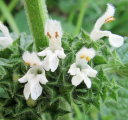
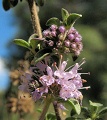
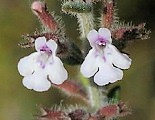
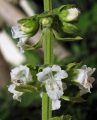
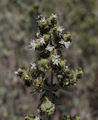
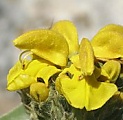
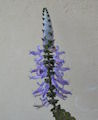
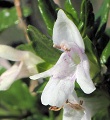
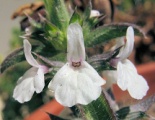
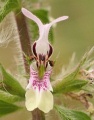
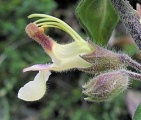
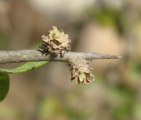
Family Description: Lamiaceae, also known as the mint family, is a large and diverse family of flowering plants within the order Lamiales, comprising around 236 genera and over 7,000 species. It is cosmopolitan in distribution, with a strong presence in temperate and subtropical regions, and includes many familiar culinary herbs, ornamentals, and medicinal plants.
Morphologically, members of Lamiaceae are typically aromatic herbs or shrubs, though some are trees or climbers. A hallmark feature is their square stems (quadrangular in cross-section), though this is not universal. Leaves are usually opposite and decussate, simple, and exstipulate, often bearing glandular hairs that secrete essential oils responsible for their characteristic scents.
The flowers are zygomorphic, bisexual, and hypogynous, typically arranged in verticillasters—dense, false whorls formed by paired cymes. The calyx and corolla are gamosepalous and gamopetalous, respectively, with the corolla often forming a bilabiate (two-lipped) structure. The androecium usually consists of four didynamous stamens (two long and two short), though reductions to two stamens occur in some genera. The gynoecium is bicarpellary and syncarpous, forming a deeply four-lobed ovary with a gynobasic style.
The fruit is typically a schizocarp, splitting into four nutlets. Economically important genera include Mentha (mint), Ocimum (basil), Rosmarinus (rosemary), Thymus (thyme), Salvia (sage), and Lavandula (lavender).
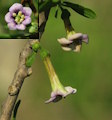
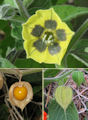
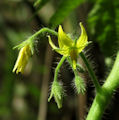
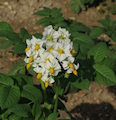
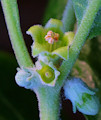
Family Description: Solanaceae, commonly known as the nightshade or potato family, is a large and diverse group of flowering plants found across most regions of the world. The family includes roughly 2,700 species distributed among around 100 to 120 genera, though these numbers can vary between sources. Many of its members are of significant economic, medicinal, and ornamental importance. For example, staple food crops such as tomatoes, potatoes, eggplants, and peppers belong to this family, as does tobacco, which has long been valued for its stimulating alkaloids, and petunias that brighten gardens with their colorful blooms.
Plants in Solanaceae typically exhibit simple, alternate leaves that are often devoid of stipules. Their flowers are generally arranged with pentamerous symmetry—featuring five sepals and five petals that are frequently fused at the base—accompanied by a variable number of stamens. The fruits vary widely, ranging from berries in species like tomatoes and eggplants to capsules in other groups. A notable chemical feature of many solanaceous plants is their production of alkaloids, which can render them toxic (as in belladonna or jimsonweed) while also offering properties harnessed for medicinal uses.
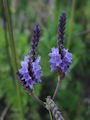
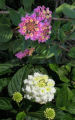
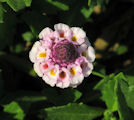
Family Description: Verbenaceae is a family of flowering plants that primarily occurs in tropical and subtropical regions, although some species extend into temperate areas. The family encompasses a range of growth forms—from herbs and shrubs to trees—with most members bearing simple, opposite or whorled leaves, often with entire margins. Their flowers typically appear in spikes, racemes, or clusters, and feature a bell- or tube-shaped corolla that is usually 4- or 5-lobed. Many of these species are noted for their aromatic foliage and showy, colorful blooms, contributing to their popularity in ornamental horticulture and traditional herbal practices.
Over time, taxonomic studies, particularly those based on molecular phylogenetics, have led to revisions in the circumscription of Verbenaceae, with several genera formerly included in the family being transferred to Lamiaceae or other families. Despite these changes, the group remains economically important; genera such as Verbena, Lantana, Lippia, and Duranta not only enhance landscapes but also offer culinary, medicinal, and sometimes even timber value. The evolving classification reflects a deeper understanding of the evolutionary relationships within the group while underscoring its significant ecological and cultural roles